

In a world where international diplomacy is often viewed through the distant lens of conference halls, official communiqués, and state receptions, Dr. Jones Yosiya Kyazze’s newly launched memoir attempts to reveal the more personal and human side of life inside a global institution.
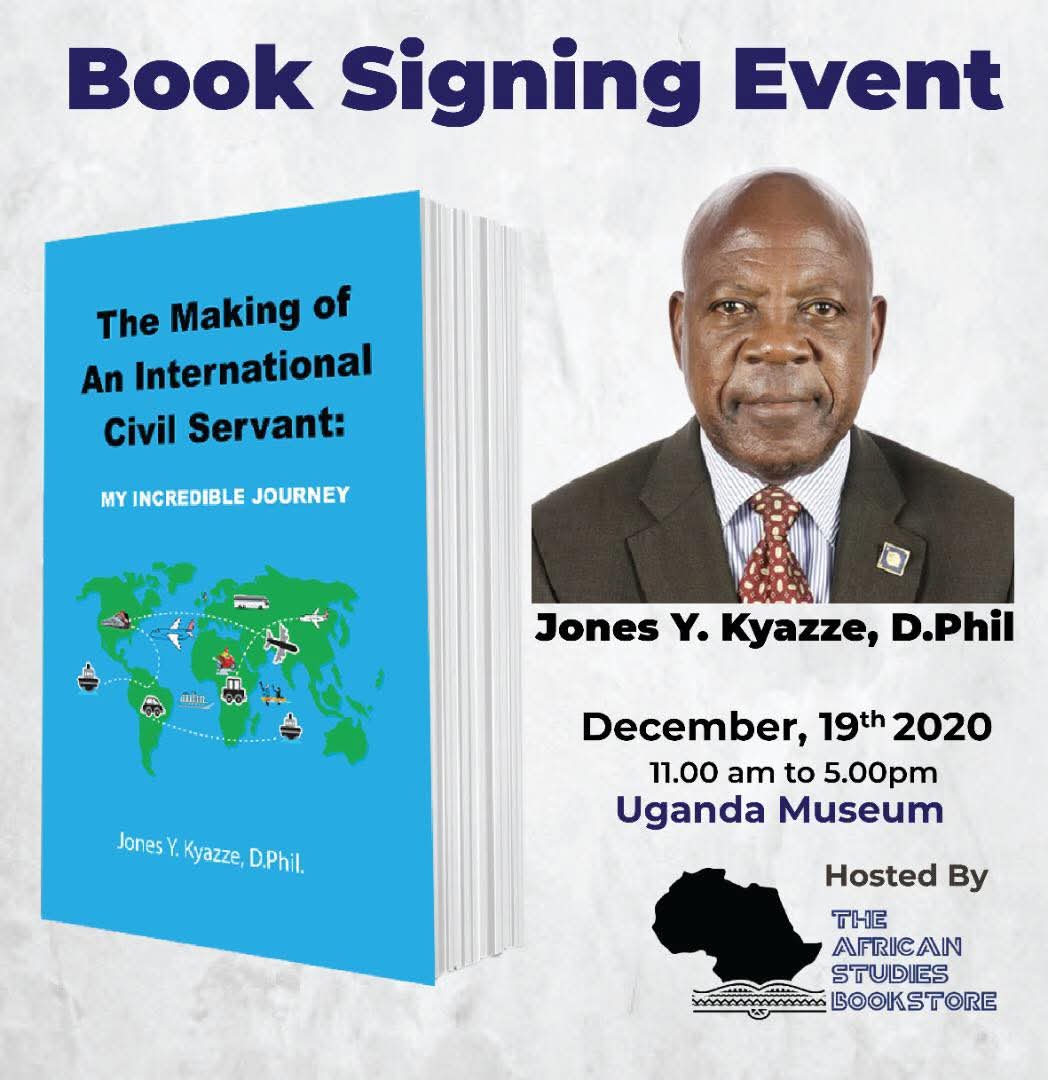
The veteran Ugandan international civil servant, diplomat, author, and historian has released The Making of an International Civil Servant: My Incredible Journey, an autobiographical work chronicling his more than thirty-two years of uninterrupted service within the United Nations Educational, Scientific and Cultural Organization (UNESCO).
Launched on 28 November 2020, the book offers a detailed account of Dr. Kyazze’s professional journey across multiple continents while navigating the demanding realities of international public service. The memoir moves beyond official assignments and diplomatic titles, exploring the balancing of professional obligations, family responsibilities, cultural identity, institutional pressures, and personal survival within the often complex environment of the United Nations system.
According to the author, the work is intended not merely as a personal recollection, but also as a reflective guide for those interested in pursuing careers within international organizations.
The memoir examines what he describes as the “pleasures, trepidations, ups and downs” of life as an international civil servant, tracing his experiences from his early years entering UNESCO through competitive recruitment processes to assignments in Africa, Europe, and the United States.
Readers are taken through the institutional culture of UNESCO, the challenges of diplomatic life abroad, the demands of international postings, and the emotional realities that often remain hidden behind the formal image of multilateral organizations.
The narrative also explores the sacrifices attached to long-term international assignments, including prolonged separation from home, maintaining cultural identity abroad, adapting to shifting political environments, and balancing family life alongside professional obligations in a career that frequently required movement between countries and continents.
For younger professionals considering international careers, the memoir presents both caution and encouragement.
Those already serving within international institutions may equally recognize aspects of their own experiences in the book’s discussions of bureaucracy, adaptation, institutional politics, and personal resilience.
The release of the memoir also marks another chapter in Dr. Kyazze’s growing body of literary and historical work, which spans autobiography, fiction, education policy, and cultural documentation.
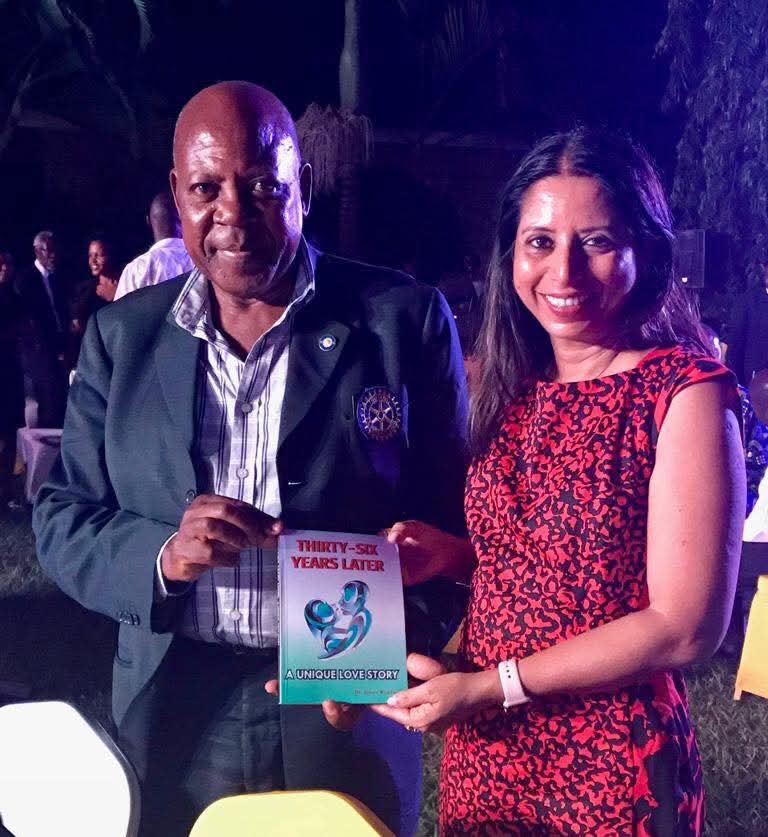
Among his other known publications as of 2020 is Thirty-Six Years Later: A Unique Love Story (2018), a novel exploring themes of separation, memory, reconnection, and the emotional consequences of time and diaspora.
He is also associated with educational and institutional writings, including Education for All: The Ugandan Experience, an examination of Uganda’s educational development and policy challenges, as well as Reflections on the Uganda National Commission for UNESCO, a work reflecting on Uganda’s relationship with UNESCO and the role of international cooperation in national development.
The publication of The Making of an International Civil Servant arrives at a time when questions surrounding African representation within global institutions, cultural preservation, and international diplomacy continue to attract renewed attention across the continent.
Yet the story told in the memoir begins long before UNESCO.
A Childhood Shaped by Buganda’s Political History
Dr. Jones Yosiya Kyazze was born on 04 November 1943 at Mulago Hospital in Kampala, Uganda.
He was raised in Nateete within an extended family compound shared between his father, Oweek. Yake Yekoniya Siki Musoke Kyazze, and his grandfather, Yosiya Kyazze, near Mackay Memorial College in Mmengo.
The environment into which he was born was closely connected to the political and traditional structures of Buganda during the final decades of British colonial administration.
His grandfather, Yosiya Kyazze, served as Minister of Finance in the Buganda Kingdom during the reigns of Kabaka Daudi Chwa and Kabaka Edward Muteesa II. He later became known for acting as guardian to Muteesa II during the Kabaka’s studies at Cambridge University in the United Kingdom between 1945 and 1948.
The elder Kyazze also participated in the well-known Namirembe Conference chaired by Professor Keith Hancock, discussions that contributed to the 1955 Buganda Agreement and the eventual return of Muteesa II from exile.
Dr. Kyazze’s father later became Speaker of the Buganda Lukiiko.
Growing up during the years leading to Uganda’s independence, the young Jones Kyazze was exposed early to political discussions, traditional governance systems, and questions surrounding leadership and public administration.
Family recollections describe a childhood marked by both discipline and unusual exposure to senior political figures and administrators.
His grandfather frequently withdrew him from school to accompany him on errands and engagements, an experience that reportedly caused him to lose a year of formal education. Yet those same experiences immersed him deeply in public affairs, leadership culture, and the workings of traditional authority.
The interactions he observed during those formative years would later influence his understanding of diplomacy and international public service.
Education and Early Leadership
Dr. Kyazze began his education at a local primary school in Nateete before transferring to Aggrey Memorial School, an institution founded by African educators who had resigned from King’s College Budo following disagreements with colonial administrators.
The school played a significant role in grounding him in Luganda language, culture, and African-centered education.
For secondary education, he attended Makerere College School for junior secondary studies before proceeding to Old Kampala Senior Secondary School, where he studied from Senior One through Senior Six.
At the time, Old Kampala Senior Secondary School had a predominantly Asian student population, exposing him to a diverse social and cultural environment during a period of major transformation in Kampala.
While there, he participated actively in extracurricular activities including athletics, boxing, scouting, drama, and student leadership.
He served as both Head Prefect and Sports Captain.
Those years reflected an educational culture that emphasized discipline, leadership, etiquette, and public responsibility alongside academic instruction.
Brief Law Studies in Tanzania
Following secondary school during the mid-1960s, Kyazze initially enrolled at the University of Dar es Salaam in Tanzania to study law, since Makerere University had not yet established a law degree program.
His stay, however, was brief.
He later described dissatisfaction with the academic and social environment under the Ujamaa socialist policies of President Julius Nyerere, which he considered restrictive.
After approximately one to two weeks, he withdrew and returned.
The decision would significantly alter the direction of his academic and professional life.
Makerere University and Intellectual Formation
Kyazze subsequently enrolled at Makerere University, then part of the University of East Africa, where he pursued a Bachelor of Arts degree specializing in History and French.
Initially, he also studied English before dropping it to concentrate on French.
Despite not having studied French during secondary school, he excelled in the subject:
- Graduated with distinction in French
- Ranked top of his class
- Earned a scholarship for postgraduate studies in France
The Makerere environment of the late 1960s occupied a central position within East African intellectual and political life.
Students from across the region interacted within an atmosphere shaped by post-independence optimism, ideological debates, student politics, literature, and emerging African scholarship.
Dr. Kyazze resided in Northcote Hall, later known as Nsibirwa Hall, a residence associated with prominent graduates including Kenyan author Ngũgĩ wa Thiong’o.
He actively participated in travelling theatre groups, drama productions, athletics, and formal social events including university dinner dances.
He also served as a member of the Guild Council, Makerere’s student government.
Among Baganda students, he held the title “Ssaabaganda,” a role historically associated with leadership among Baganda students during the era of the University of East Africa, now remembered within Nkobazambogo circles.
The university environment also emphasized etiquette and preparation for leadership and public service, including traditions surrounding formal dining, debate, public conduct, and intellectual engagement.
Studies in France and the United Kingdom
Following his undergraduate studies, Dr. Kyazze travelled to France to pursue further education at the University of Besançon, where he obtained a Licence-ès-Lettres.
During his stay, he attained fluency in French and became deeply exposed to European academic and cultural systems.
He later continued his studies in the United Kingdom:
- University of London — Postgraduate Diploma in Education
- University of Sussex — Doctor of Philosophy (D.Phil.)
The combination of African, French, and British educational experiences would later shape his work within international institutions.
Entry Into UNESCO
Following postgraduate studies in France, Dr. Kyazze entered UNESCO through a competitive recruitment and training process.
He began as a stagiaire, or intern, during a period when newly independent African states were increasingly seeking representation within global institutions.
Mentorship from senior African professionals already within UNESCO reportedly assisted his early integration into the organization.
He quickly distinguished himself through international assignments including missions in Algeria, Guinea, Nigeria, Senegal, and other countries.
He was subsequently retained and rose through the ranks.
More Than Three Decades in International Civil Service
Dr. Kyazze served within UNESCO for approximately thirty-two and a half years.
His assignments took him across Africa, Europe, and North America, including service in:
- Paris, France (UNESCO Headquarters)
- Dakar, Senegal
- New York, United States
- Other international postings and assignments
Throughout his career, his work focused on education, international cooperation, diplomacy, and cultural heritage preservation.
His tenure coincided with major global political transitions including post-colonial state formation in Africa, Cold War realignments, educational reforms, and increasing international concern over cultural preservation.
He is particularly remembered for his involvement in efforts linked to the inscription of the Kasubi Royal Tombs on UNESCO’s list of World Cultural Heritage sites.
For Uganda, the Kasubi Tombs represented not merely a cultural monument but an important symbol of Buganda’s royal history and heritage.
Service in the Buganda Government
Following his retirement from UNESCO and return to Uganda, Dr. Kyazze served in the Buganda Government between 2005 and 2007 as Minister for Tourism and Wildlife, following his appointment by Kabaka Ronald Muwenda Mutebi II. The role connected his long-standing involvement in cultural and heritage affairs with the kingdom’s tourism and conservation initiatives.
Personal Life and Connection to Uganda
Although much of his professional life was spent abroad, Dr. Kyazze maintained close ties with Uganda.
He frequently returned home, invested in real estate, participated in family life, and remained connected to Buganda Kingdom affairs and cultural activities.
He has four children.
Three reside abroad, while his youngest child lives in Uganda.
Throughout his public reflections and writings, he has often emphasized the importance of maintaining cultural identity and preserving connections to home despite long periods overseas.
He continues to speak and write fluently in Luganda.
Rotary International and Public Service
Outside UNESCO, Dr. Kyazze has maintained a long involvement with Rotary International.
He joined Rotary in 1989 through the Rotary Club of Greater Freetown in Sierra Leone, where he served as Club Secretary.
In 1990, he was recognized as a Paul Harris Fellow.
Following his transfer to Nigeria in 1992, he joined the Rotary Club of Ikoyi in Lagos, serving first as Secretary and later as Vice President.
In 2001, while serving as UNESCO Representative to the United Nations in New York, he became a member of the Rotary Club of New York.
After returning to Uganda in 2004, he joined the Rotary Club of Kampala Arch, serving as Treasurer and later Secretary.
In 2007, he became Charter President of the Rotary Club of Nateete-Kampala, his birthplace.
His Rotary work later expanded through multiple leadership roles including:
- Rotary Community Corps Country Chair (2009–2010)
- Country Trainer, Uganda (2010–2011)
- Country Chair for Membership (2011–2012)
At district level within Rotary District 9200, he served twice as Assistant Governor between 2012 and 2014, overseeing multiple clubs.
In 2012, he also led the District 9200 Group Study Exchange Team to Sweden, heading a delegation from Uganda, Kenya, and Tanzania.
Internationally, he became associated with The Rotary Foundation as a World Coordinator for Basic Education and Literacy and later served within the Foundation’s Cadre of Technical Advisers.
His participation in Rotary activities has included:
- 18 District Conferences and Assemblies
- 18 Rotary International Conventions
- 5 Zone Institutes
- 2 Presidential Conferences
He is also recognized as a Major Donor and Benefactor of The Rotary Foundation.
Documenting a Generation
The publication of The Making of an International Civil Servant represents more than a personal memoir.
It also serves as a historical account of a generation of African intellectuals and civil servants who transitioned from colonial-era education systems into international diplomacy and global institutions.
Through his writing, Dr. Kyazze documents not only his own experiences, but also the wider evolution of African participation within international organizations during the post-independence era.
His work preserves fragments of political memory, educational history, institutional culture, and personal experience that might otherwise disappear from public record.
In many ways, the memoir returns repeatedly to the same central question that shaped much of his life:
